
TDDS Patch Specialist Balancing Growth, Margins, and Leverage
Investment View in One Line
TDS Pharm is a technically differentiated TDDS contract manufacturer with a recovering margin profile — but customer concentration, rising borrowings, and unproven export execution are the conditions investors need to resolve before the growth story becomes a re-rating story.
Executive Summary:
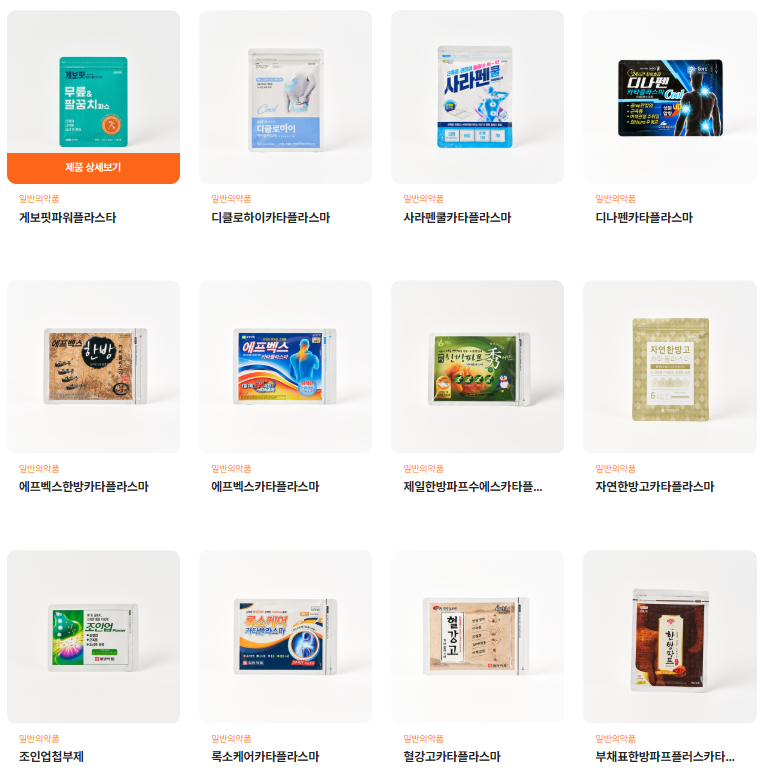
- TDS Pharm specializes in transdermal drug delivery systems (TDDS) — patches and cataplasms — manufactured under ODM/OEM contracts for Korean pharmaceutical clients. Formulation IP and regulatory barriers keep new entrants out, but the business is exposed to the buying power of a concentrated customer base (top two ≈50% of sales).
- 2024 annual revenue was 18.6 USD M with an operating margin of 13.6%. 2025Q3 showed a strong recovery to 5.5 USD M revenue and a 20.3% operating margin, though Q1 and Q2 were weaker (3.6% and 5.8% respectively), pointing to meaningful contract-timing seasonality.
- The company recently acquired a production site in Osong and increased short-term borrowings (approximately 4.3 USD M in KRW terms), raising leverage while the firm awaits revenue uplift from new capacity and export approvals.
- Export market approvals (Vietnam, Mongolia, Malaysia, Uzbekistan) represent the most concrete near-term growth optionality, but timing and scope remain execution-dependent.
- Current valuation (as of early 2026): PER 12.7x, PBR 1.09x, market cap approximately 33–34 USD M (~KRW 47bn / 470억원). Multiples are modest for the sector but reflect real concentration and execution risks that are not yet resolved.
Why This Stock Matters
TDS Pharm occupies a specific and defensible niche: formulation and contract manufacturing of TDDS products in a segment where regulatory approvals, adhesive polymer know-how, and skin permeation IP create genuine entry barriers. The demographic tailwind — aging populations with persistent demand for topical pain management — is structural, not cyclical. As an ODM provider linked to larger domestic pharma companies’ product strategies, TDS Pharm’s execution quality and contract pipeline matter directly to investors tracking specialized pharmaceutical manufacturing. What makes the current moment worth attention is the combination of a margin recovery visible in 2025Q3, a capacity expansion in progress, and several pending export approvals — any one of which converting successfully would change the revenue visibility picture materially.
Business Model Explained
TDS Pharm operates without branded end-market presence. Its revenue comes entirely from ODM/OEM contracts: pharmaceutical clients supply product specifications, and TDS Pharm handles formulation development, manufacturing, and quality compliance. The company’s competitive position rests on its patent portfolio (adhesive polymer systems, release-rate controls, skin permeation enhancers) and its track record of regulatory-grade manufacturing — both of which create switching costs for established clients and barriers for new entrants.
The business has two near-term growth vectors. First, export market expansion: the company has submitted or is in the process of submitting approvals in Vietnam, Mongolia, Malaysia, and Uzbekistan, targeting markets where Korean pharma products carry quality credibility and where competition from global patch specialists is less intense. Second, capacity expansion: the Osong site acquisition adds physical throughput and positions the company to take on larger or more varied contracts. Neither vector has yet produced a step-change in reported revenue, which is why 2025 results remain the primary benchmark investors are watching.
The structural risk in this model is customer concentration. When the top two clients represent approximately half of sales, a single contract renegotiation, program discontinuation, or client M&A event can produce outsized revenue impact. TDS Pharm’s stated strategy of diversifying through export channels and M&A is a direct response to this, but execution timelines are uncertain.
Core Investment Thesis
1. TDDS formulation IP creates real barriers, not just stated differentiation
TDS Pharm holds patents covering adhesive polymer systems, skin permeation enhancers, and controlled-release architectures. These are not marketing claims — they represent the regulatory and technical basis on which pharmaceutical clients rely for product filings in Korea and overseas. A contract manufacturer without this IP stack cannot simply be substituted. This means TDS Pharm’s pricing and margin position with established clients is more defensible than a pure cost-competition framework would suggest. The 13.6% operating margin in 2024 and 20.3% in 2025Q3 are consistent with a firm that has genuine technical leverage in its client negotiations.
2. Export approvals represent asymmetric upside relative to the current revenue base
With annual revenue at roughly 18–19 USD M, a single meaningful export contract in a market like Vietnam (where Korean OTC topical products have established brand recognition) could represent 10–20% incremental revenue. The company reports active approval submissions in four markets: Vietnam, Mongolia, Malaysia, and Uzbekistan. These are regulatory processes in progress, though commercial timelines remain dependent on regulatory decisions and distribution partnerships that are not yet confirmed. The asymmetry is that success in even one market meaningfully improves revenue diversification while a delay leaves the current domestic ODM base intact.
3. 2025Q3 margin recovery may indicate the underlying business economics remain intact
The 20.3% operating margin in 2025Q3 on 5.5 USD M revenue is consistent with what a well-run TDDS contract manufacturer at this scale can achieve in a high-utilization quarter. The weaker Q1 and Q2 (3.6% and 5.8%) appear to reflect contract timing rather than structural deterioration — a pattern typical of OEM businesses where large fulfillment events cluster unevenly. That said, one strong quarter is not sufficient to confirm a durable run-rate. The key question for investors is whether 2025Q4 and 2026Q1 sustain margins above the low-single-digit range, which would provide more confidence that the Q3 result reflects operating conditions rather than a one-off contract timing benefit.
Revenue & Margin Snapshot
| Item | 2024 |
|---|---|
| Revenue | 18.6 |
| Op. Profit | 2.5 |
| Op. Margin | 13.6% |
| Net Income | 2.5 |
| OCF | ~3.0 |
| CAPEX | ~0 |
| ROE | 9.7% |
* TDS Pharm listed on KOSDAQ in 2024. The 2024 “annual” figures reported cover only the period from listing (approximately Q3–Q4 2024). This is consistent with the quarterly data: 2024Q3 (15.0 USD M) + 2024Q4 (3.8 USD M) = 18.8 USD M revenue and 2.4 + 0.2 = 2.6 USD M op.profit — both within rounding of the reported annual figures. There is no discrepancy; the annual report does not cover a full 12-month fiscal year.

Key takeaway from the annual data
With only 2024 annual data available, the benchmark is a 13.6% operating margin on 18.6 USD M revenue — a solid result for a specialized contract manufacturer at this scale. The key question is whether 2025 full-year results, once reported, confirm or exceed this, particularly given the strong 2025Q3 margin of 20.3%.
Recent Quarterly Performance
The quarterly pattern through 2025Q3 confirms that TDS Pharm’s revenue is lumpy in timing but structurally positive in margin. Q1 and Q2 2025 were both sub-6% operating margin on revenues of 3.6–3.8 USD M — consistent with quarters where large contract fulfillment events did not occur. Q3 2025 reversed sharply to 20.3% on 5.5 USD M revenue, suggesting either a significant contract delivery or favorable product mix in that quarter. The Q4 2024 pattern (5.3% margin on 3.8 USD M) supports the interpretation that this seasonality is recurring rather than a one-off event.
| Quarter | Revenue | Op. Profit | Op. Margin | Net Income |
|---|---|---|---|---|
| 2025Q3 | 5.5 | 1.1 | 20.3% | 1.0 |
| 2025Q2 | 3.8 | 0.2 | 5.8% | 0.6 |
| 2025Q1 | 3.6 | 0.1 | 3.6% | 0.2 |
| 2024Q4 | 3.8 | 0.2 | 5.3% | 0.4 |
| 2024Q3 | 15.0 | 2.4 | 15.7% | 2.0 |
* 2024Q3 revenue of 15.0 USD M represents the first full quarter following the company’s KOSDAQ listing. Together with 2024Q4 (3.8 USD M), these two quarters constitute the reported 2024 “annual” figures (18.8 USD M ≈ reported 18.6 USD M annual, difference due to rounding). Prior quarters are not reflected in the public annual report as the company was not yet listed.
▶ Quarterly Revenue & Op. Profit Trend (USD M)

Balance Sheet & Financial Stability
TDS Pharm is modestly profitable with positive net income in 2024 (2.5 USD M) and improving quarterly cash generation in 2025Q3. The balance sheet picture has become more complex recently. The company acquired a production site in Osong, a move that adds manufacturing capacity but requires capital deployment. Short-term borrowings increased to approximately 4.3 USD M (60억 KRW), raising near-term leverage. Management also reports holding cash-like assets earmarked for M&A, which creates optionality but also introduces execution risk if acquisition targets prove difficult to integrate or if revenue synergies lag expectations.
The trade-off is clear: capacity expansion and M&A activity create the conditions for higher revenue — but they also raise financial obligations and reduce free cash flow flexibility in the near term. With OCF running at approximately 3 USD M in 2024, coverage of debt service and CAPEX is manageable if the Q3 2025 margin run-rate holds. Deterioration back toward Q1/Q2 2025 levels would compress that coverage meaningfully.
| Year | OCF (USD M) | CAPEX (USD M) | FCF (USD M) | ROE (%) |
|---|---|---|---|---|
| 2024 | ~3.0 | ~0 | ~3.0 | 9.7% |
* Full multi-year FCF data not available in current coverage. Osong site acquisition CAPEX and borrowing increase expected to be reflected in 2025 annual figures once disclosed.
Valuation Perspective
At a market cap of approximately 33–34 USD M (~KRW 47bn / 470억원 ÷ ~1,400 KRW/USD, as of early 2026), PER 12.7x, and PBR 1.09x, TDS Pharm is valued modestly for a profitable specialized manufacturer. For context, diversified Korean pharma companies and global TDDS specialists like Hisamitsu typically command higher multiples on the back of larger revenue bases, established global distribution, and lower customer concentration. Within the small-cap Korean pharmaceutical manufacturing segment, the current multiple range is neither deeply discounted nor premature — it essentially prices the current earnings power without a premium for expansion optionality.
Re-rating conditions: if export approvals convert to recurring revenue contracts in even one or two markets, and if the Osong capacity enables consistent quarterly revenue above the 5 USD M range, the earnings base supporting these multiples grows materially. Conversely, if customer concentration persists and interest expense rises without revenue uplift, the current multiples could face downward pressure. The 2025 full-year and 2026Q1 results will be the first clear test of which scenario is developing.
Key Risks
1. Customer concentration — top two clients ≈50% of sales
With two customers responsible for roughly half of revenue, TDS Pharm’s top line is vulnerable to single-client decisions: contract renegotiation, program discontinuation, or a client M&A event could remove a meaningful portion of revenue with limited short-term replacement options. This concentration also weakens TDS Pharm’s pricing leverage in contract renewals. Until the customer base broadens through export diversification or new domestic contracts, this remains the primary structural risk.
2. Execution and financing risk from recent asset acquisition and borrowing
The Osong site acquisition and approximately 4.3 USD M increase in short-term borrowings represent a deliberate bet on future revenue growth. If that growth is delayed — due to slower-than-expected export approvals, M&A integration challenges, or a soft domestic contract cycle — the company faces rising interest expense against a revenue base that may not expand quickly enough. Free cash flow, currently manageable, could be compressed in a scenario where 2025 full-year results revert toward Q1/Q2 margins.
3. Export market timing uncertainty
Approvals in Vietnam, Mongolia, Malaysia, and Uzbekistan are in process, but regulatory timelines in these markets are not under TDS Pharm’s control and can extend unpredictably. Each market also requires local distribution partnerships, product adaptation, and ongoing regulatory maintenance. If approvals arrive later than the investment case assumes, the revenue diversification that justifies the current valuation premium over pure-play domestic manufacturers will not materialize on schedule.
4. Quarterly revenue seasonality creates forecasting and perception risk
The gap between Q3 2025 (5.5 USD M, 20.3% margin) and Q1 2025 (3.6 USD M, 3.6% margin) reflects how dramatically contract timing can move quarterly results. This creates investor perception risk: a weak Q4 or Q1 following a strong Q3 can look like deterioration even when the underlying business is stable. Investors need to evaluate rolling 12-month metrics rather than sequential quarters to form an accurate view of operating trends.
What to Watch Next
- Export approval announcements for Vietnam, Mongolia, Malaysia, and Uzbekistan — timing and scope will determine whether international revenue becomes a 2026 story or a 2027 story.
- 2025 full-year results: whether the Q3 2025 margin improvement (20.3%) carries through into Q4, or whether Q4 reverts to the sub-6% pattern seen in Q4 2024 and early 2025.
- Osong site integration: production ramp timeline and whether new capacity is tied to confirmed contracts or speculative volume.
- M&A announcements: if management deploys the earmarked cash, the target profile, price, and integration plan will be critical for assessing whether the acquisition creates or dilutes value.
- Customer concentration metrics: any signs in annual disclosures that the top-two customer share is declining toward a safer diversification level.
- Interest expense and debt service coverage: monitor in 2025 annual report for impact of the new borrowings on net income and cash flow.
FAQ
QWhat does TDS Pharm actually make, and who buys it?
TDS Pharm manufactures transdermal patches and cataplasms — topical delivery systems for pain management and other drug applications. Customers are Korean pharmaceutical companies that license or develop these products under their own brands; TDS Pharm handles formulation, manufacturing, and quality compliance under ODM/OEM contracts. The company does not sell branded products to end consumers.
QWhy is the quarterly revenue so uneven?
ODM/OEM revenue is driven by contract fulfillment timing rather than steady retail demand. Large orders tend to cluster in specific quarters depending on client product launch schedules, regulatory submission windows, and inventory planning cycles. This makes quarter-to-quarter comparisons unreliable as trend signals. The 2024Q3 figure of 15.0 USD M versus the 3–5 USD M range in surrounding quarters is the most extreme example in recent data and likely reflects a single large contract delivery, possibly around the company’s IPO period.
QHow significant is the customer concentration risk in practice?
Very significant at the current level. Two clients accounting for ~50% of sales means that losing a single major client could reduce revenue by 25% or more with limited short-term substitution. The export diversification strategy is the right response, but until export revenue is recurring and material — not just approval-stage — the concentration risk remains live. Investors should treat any reduction in top-two client share as a positive re-rating signal.
QWhat is the significance of the Osong site acquisition?
Osong is a major Korean pharmaceutical cluster (home to the Korea Disease Control and Prevention Agency and multiple pharma manufacturers), so a production site there signals intent to scale manufacturing and potentially attract clients who value proximity to regulatory infrastructure. The acquisition adds physical capacity but also adds fixed costs. The question is whether that capacity is tied to committed future contracts or is being built speculatively — the answer will determine whether the acquisition is margin-accretive or dilutive in the near term.
QAt 12.7x PER and 1.09x PBR, is TDS Pharm cheap?
The multiples are modest but not obviously cheap given the risks. At 12.7x, the market is pricing something close to steady-state earnings without expansion optionality. If export approvals convert and the Osong capacity ramps, those multiples would look attractive in retrospect. If execution stalls and the customer concentration situation worsens, the current multiple could compress further. This is a quality-of-earnings question more than a pure valuation one — the earnings need to prove their durability before the multiple deserves a premium.
This material is provided for informational purposes only and does not constitute a solicitation or recommendation to buy or sell any security. All figures, projections, and analyses are based on publicly available information and may differ from actual results; they are subject to change without notice. The reader bears full responsibility for any investment decisions made. The author accepts no legal liability for any investment outcome arising from reliance on this material. All investment decisions should be made at the reader’s own discretion and risk. Independent professional investment advice should be sought where appropriate.