
Investment View in One Line
Cell Biotech’s probiotics business generates consistent free cash flow that finances early-stage drug development; near-term stock sensitivity will hinge on clinical milestones from PP-P8 and whether European export momentum is sustained.
Executive Summary:
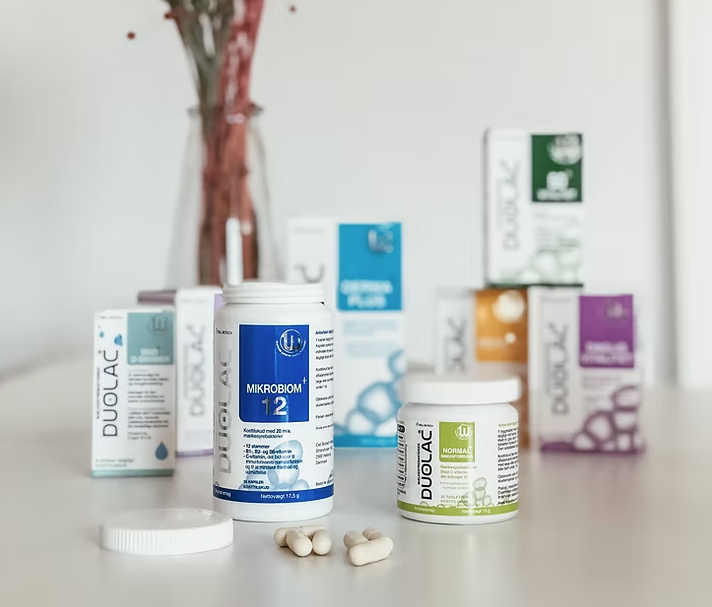
- Cell Biotech operates a profitable probiotic and health-supplement business (DOULAC brand) while directing cash flow toward early-stage drug R&D. The company reports #1 presence in the Danish pharmacy channel (per management) and exports to approximately 40 countries.
- The PP-P8 colon-cancer candidate entered Phase 1 on 2025-01-22; immunomodulatory programs are also in development. Clinical progress is the primary optionality driver.
- Balance sheet is cash-rich and largely debt-free: approximately 11.4 USD M in cash (171억 KRW), 50.3 USD M in short-term financial instruments (759억 KRW), and total debt of ~3.3 USD M (49억 KRW), with market cap approximately 89.6 USD M (~1350억 KRW at ~1507 KRW/USD).
- Free cash flow has been positive across most years; 2024 FCF came in at 12.1 USD M on minimal capex.
- Key risk in one line: clinical binary outcomes and recurring operating margin volatility are the primary factors keeping the stock’s valuation compressed.
Why This Stock Matters
Cell Biotech’s distinctive structure — a consumer-facing business with proprietary strain IP funding higher-value pharmaceutical programs — makes it worth tracking. The DOULAC franchise and Danish pharmacy channel provide a stable earnings base; management states it is directing that cash into a PP-P8 colon-cancer Phase 1 program (clinical start: 2025-01-22). The next 12–18 months will be pivotal in determining whether clinical optionality materialises into a meaningful re-rating or whether the market continues to treat the company primarily as a consumer supplement supplier.
Core Investment Thesis
1. Proprietary strains and international DOULAC distribution
Cell Biotech owns proprietary probiotic strains commercialized under the DOULAC brand. Management positions the company as holding #1 presence in the Danish pharmacy channel and reports exports to roughly 40 countries. If sustained, this commercial footprint supports recurring product sales and provides a potential platform for scaling branded margins internationally.
2. Consistent free cash flow funding drug development
The business has produced positive FCF across most measured years; management is directing those proceeds into strain-based drug R&D, including PP-P8 (Phase 1 start: 2025-01-22) and immunomodulatory programs. A positive clinical signal from PP-P8 could shift the market’s narrative from a consumer ingredient supplier to an early-stage biotech developer — though clinical risk is binary and should be treated accordingly.
3. Cash-rich balance sheet with minimal debt
Approximately 11.4 USD M in cash plus 50.3 USD M in short-term financial instruments, against total debt of ~3.3 USD M and a market cap of ~89.6 USD M (all figures at ~1507 KRW/USD, market cap ~1350억 KRW). This liquidity gives management runway to fund trials without near-term equity dilution, though any sustained deterioration in operating cash flow would reduce that runway materially.
4. Technology and channel differentiation (optional upside)
The company’s dual-coating formulation and long-term strain database provide product differentiation relative to generic supplement competitors. The Danish pharmacy channel offers a premium consumer route. These are supporting factors that could enhance margins if execution holds — they should be treated as upside to the core commercial thesis, not as standalone investment drivers.
Business Model Explained
Cell Biotech sells finished consumer products and raw probiotic material through retail, pharmacy, and B2B export channels, while running R&D programs built on the same biological assets. The revenue engine is relatively predictable; the R&D component is lumpy and binary. Manufacturing capacity for both raw-material and finished-product output is shared, which helps keep unit costs in check and preserve cash flow for development spend.
Revenue & Margin Snapshot
| Item | 2022 | 2023 | 2024 | 2025 |
|---|---|---|---|---|
| Revenue | 33 | 36 | 33 | 35 |
| Op. Profit | 4 | 1 | 4 | 5 |
| Op. Margin | 12.0% | 4.1% | 13.6% | 14.9% |
| Net Income | 5 | 4 | 10 | 7 |
| OCF | 8 | 5 | 13 | 7 |
| CAPEX | 2 | 1 | 1 | 2 |
| ROE | 7.7% | 5.6% | 12.2% | 7.7% |
▶ Annual Revenue, Op. Profit & Op. Margin Trend (USD M)

Key takeaway from the financial trend
Operating margins have swung materially — from a low of 4.1% (2023) to a recovery of 13–15% range (2024–2025). The sharp margin compression around 2019 coincided with a significant capex investment cycle (2019 capex ~6.3 USD M), which temporarily depressed profitability but enabled subsequent export volume growth. This pattern — periodic investment followed by margin recovery — is the key dynamic to understand when reading annual results.
What’s Driving the Numbers
The steep operating margin drop around 2019 coincided with a major capacity expansion (capex spiked to ~6.3 USD M that year, and FCF fell to ~0.5 USD M). Management appears to have used that investment to increase raw-material and finished-product throughput, which temporarily depressed margins but enabled higher export volumes in subsequent years.
The stock’s relatively compressed valuation reflects two concrete investor concerns: (1) clinical and regulatory binary risk from the PP-P8 program (Phase 1 began 2025-01-22), and (2) historical profit volatility tied to periodic investment cycles and product-mix changes. The market appears to price Cell Biotech as a stable consumer supplier with speculative R&D attached, rather than as a biotech re-rating candidate — which keeps multiples modest relative to sector peers that have demonstrated clinical progress.
Recent Quarterly Performance
Quarterly results in 2025 show margin re-acceleration in H2. 2025Q4 had revenue 9.7 USD M with operating profit 2.0 USD M (20.9% op margin) and net income 2.9 USD M; 2025Q3 had revenue 10.2 USD M with 1.5 USD M op profit (14.4% margin). This H2 improvement implies seasonal demand strength and better cost absorption in the latter part of 2025.
| Quarter | Revenue (USD M) | Op. Profit (USD M) | Net Income (USD M) |
|---|---|---|---|
| 2025Q4 | 9.7 | 2.0 | 2.9 |
| 2025Q3 | 10.2 | 1.5 | 2.3 |
| 2025Q2 | 7.9 | 0.9 | 0.1 |
| 2025Q1 | 7.5 | 0.9 | 1.4 |
▶ Quarterly Revenue, Op. Profit & Op. Margin Trend (USD M)

Industry Context & Competitive Position
The probiotics and microbiome space is gradually shifting toward higher-value therapeutic applications while core health-supplement demand remains resilient. Cell Biotech’s dual-coating formulation and in-house strain database offer credible differentiation relative to generic supplement manufacturers. However, the company competes against larger players with substantially deeper branding and distribution budgets, and its claimed #1 position in the Danish pharmacy channel (per management) would need to be independently verified against category data to treat as a structural competitive moat.
Balance Sheet & Financial Stability
The company’s cash-rich, low-debt balance sheet is a genuine operational strength. All KRW figures converted at approximately 1507 KRW/USD.
| Year | OCF (USD M) | CAPEX (USD M) | FCF (USD M) | ROE (%) |
|---|---|---|---|---|
| 2022 | 8.5 | 1.6 | 6.9 | 7.7% |
| 2023 | 5.2 | 1.0 | 4.2 | 5.6% |
| 2024 | 12.8 | 0.7 | 12.1 | 12.2% |
| 2025 | 7.4 | 2.1 | 5.3 | 7.7% |
Valuation Perspective
At a market cap of approximately 89.6 USD M (~1350억 KRW), the stock trades at roughly 12–13x trailing earnings (based on 2025 net income of ~7 USD M) and below book value (PBR approximately 0.77x). A sub-1x PBR alongside a positive FCF profile and sizeable cash position suggests the market is pricing in meaningful risk rather than assigning a premium — consistent with investor caution over clinical binary risk and recurring margin volatility.
Compared to domestic consumer/pharma peers, which typically trade in a 10–30x earnings range, Cell Biotech’s current multiple appears roughly in line with the lower end of that band. A re-rating toward the higher end of the peer range would require credible clinical signals from PP-P8 or a sustained step-up in European export growth. A detailed scenario analysis is available in the full research report.
Key Risks
Investment Considerations:
1) Re-rating may take an extended time — clinical programs and brand expansion are multi-year processes with uncertain timelines.
2) Succession or major-shareholder transition (owner born 1958) could affect strategic direction and market perception. Monitor as a non-operational risk factor.
1. Clinical and regulatory binary risk
PP-P8 and other strain-based therapeutics are in Phase 1. Trial failures, IND setbacks, or regulatory delays would remove the primary upside storyline and likely redirect investor focus to the lower-growth consumer business, compressing multiples further.
2. Operating margin and cash conversion volatility
Operating margins have historically swung between roughly 4% and 20% across different periods, driven by investment cycles and product-mix shifts. This makes near-term earnings difficult to model with confidence and raises financing risk if cash generation weakens during an expansion phase.
3. Channel and customer concentration
A meaningful portion of international sales routes through specific channels, including the Danish pharmacy network. Dependence on a limited number of distribution partners means any deterioration in those relationships or regulatory changes in export markets could have an outsized revenue impact.
What to Watch Next
- PP-P8 Phase 1 safety data and any early biomarker readouts — enrollment milestones and timing of interim reports.
- Quarterly European/Denmark channel sales updates and international distribution expansion news.
- Management guidance on capex and whether upcoming investment plans affect FCF conversion.
- Changes in short-term financial assets or cash reserves that could indicate shifts in R&D runway.
- Corporate governance updates related to major-shareholder succession planning.
FAQ
QIs Cell Biotech a probiotic company or a biotech company?
Primarily a probiotic and health-supplement company by revenue. The biotech angle — PP-P8 colon-cancer treatment in Phase 1 — is funded by that consumer business. Whether the biotech label eventually applies depends on clinical progress.
QWhat is the key near-term catalyst?
PP-P8 Phase 1 safety data and initial efficacy signals are the most important stock catalysts over the next 12–18 months. European export momentum — particularly Denmark pharmacy channel performance — is the second variable to track.
QWhy does the stock trade at or below book value despite positive FCF?
The PBR below 1x likely reflects investor caution about clinical binary risk (PP-P8 Phase 1 could fail) and recurring margin volatility, rather than any fundamental balance sheet weakness. The cash position is solid; the discount is driven by risk perception, not financial distress.
QHow strong is the company’s cash position?
Cash of ~11.4 USD M plus ~50.3 USD M in short-term financial instruments, against ~3.3 USD M in total debt (market cap ~89.6 USD M). This gives the company meaningful runway to fund R&D without near-term equity dilution, assuming no major deterioration in operating cash flow.
QWhat would prompt a valuation re-rating?
A credible positive signal from the PP-P8 Phase 1 trial would be the most significant re-rating trigger. Sustained export growth — particularly if Denmark channel share continues expanding — could also narrow the discount to book value over time.
HOMEPAGE : https://www.cellbiotech.com/
This material is provided for informational purposes only and does not constitute a solicitation or recommendation to buy or sell any security.
All figures, projections, and analyses are based on publicly available information and may differ from actual results; they are subject to change without notice.
The reader bears full responsibility for any investment decisions made. The author accepts no legal liability for any investment outcome arising from reliance on this material.
All investment decisions should be made at the reader’s own discretion and risk. Independent professional investment advice should be sought where appropriate.