
Investment View in One Line
Shinwon’s 2024 revenue recovery to 630 USD M confirms demand resilience, but a structural 2–3% operating margin ceiling, persistently negative FCF, and an unresolved governance succession create a profile where the investment case rests almost entirely on whether the CAPEX cycle converts to earnings — a question 2025 quarterly results are beginning to answer negatively.
Executive Summary:
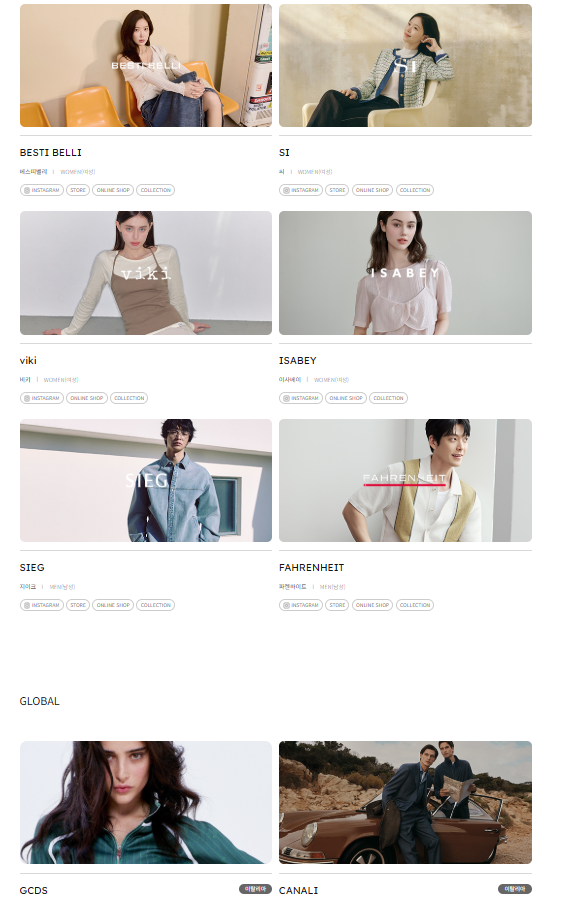
- Shinwon is Korea’s largest knit/sweater OEM/ODM exporter, supplying GAP, Walmart, and Target through eight overseas production sites (Guatemala, Vietnam, Indonesia, Nicaragua, and others), with domestic fashion brands (Bestivelli, SI, SIEG) contributing approximately 20% of sales.
- 2024 revenue recovered to 630 USD M (+12.5% vs. the 2023 trough of 560 USD M), but operating profit was only 17 USD M (2.7% margin) — consistent with the company’s decade-long pattern of thin margins that rarely exceed 3.5% even in peak years.
- FCF has been negative in three of the past four years. OCF of 23 USD M in 2024 was consumed by CAPEX of 25 USD M, producing -2 USD M FCF. Over 2021–2024, cumulative FCF was approximately -19 USD M against cumulative CAPEX of 81 USD M — a capital deployment cycle that has not yet translated into margin expansion.
- 2025 quarterly results through Q3 show a concerning deterioration: operating margins of 2.4%, 0.4%, and 0.5% in Q1–Q3, with net income negative in all three quarters (-1.1, -2.3, -0.7 USD M). This is materially weaker than the 2024 annual profile and raises questions about whether the CAPEX investment thesis is delivering on schedule.
- Valuation (as of early 2026): PER 27.3x, PBR 0.53x, market cap approximately 109 USD M (~KRW 152.6bn at ~1,400 KRW/USD). The 0.53x PBR suggests the market discounts the asset base heavily — consistent with elevated net debt, thin margins, and governance uncertainty. The 27.3x PER is high for a company currently generating near-zero net income and reflects either cyclical upside expectation or governance catalyst pricing.
- Key non-financial risk: the largest shareholder is T&M Communications, controlled by Chairman Park Sung-cheol (born 1940). Succession is unresolved and represents an overhang that institutional investors typically apply a discount to.
Why This Stock Matters
Shinwon represents the largest-scale Korean knit OEM/ODM manufacturer with a demonstrated ability to serve Tier-1 global retailers across multiple production geographies simultaneously. That capability — built over decades and supported by eight overseas sites — is not easily replicable by smaller competitors. The investment question is not whether the business is durable; it almost certainly is. The question is whether the current capital investment phase, which has consumed more cash than the business generates in three of the past four years and cumulatively over 2021–2024, will produce a margin inflection that the market is partially pricing in at 27.3x PER. With 2025 quarterly margins running at 0.4–2.4%, the inflection has not yet arrived. Whether it does in 2026 is the decisive near-term variable.
Business Model Explained
Shinwon’s business divides into two segments with different economics. The OEM/ODM export segment (~80% of revenue) manufactures knit garments and sweaters to specifications provided by large global retailers, using a multi-country production footprint to optimize cost, lead time, and tariff exposure. The domestic brand segment (~20% of revenue) operates fashion retail under proprietary brands through physical stores and online channels in Korea. The export segment provides volume; the brand segment provides higher per-unit margin but is exposed to domestic consumer sentiment and retail foot traffic trends.
The strategic pivot underway is OEM to ODM — shifting from pure contract production to design-integrated manufacturing where Shinwon contributes product development capability rather than just manufacturing execution. ODM commands better pricing and deeper client relationships than pure OEM, but it requires sustained R&D investment and trust-building with buyers. This transition is what justifies the multi-year CAPEX cycle; the challenge is that it also means current margins remain under pressure during the investment phase. Management’s stated thesis is that the new capacity will create operating leverage as utilization rises — which requires order volumes to continue recovering toward and above the 2022 peak of 668 USD M.
Eight overseas production sites create geographic diversification that reduces single-country risk but also creates operational complexity: each site has its own labor cost profile, logistics cost, regulatory environment, and political risk exposure. The Guatemala and Nicaragua sites specifically expose the company to US trade policy risk — any change in trade preferences for Central American apparel exports (particularly from programs like CAFTA-DR) could materially affect the cost competitiveness of those sites.
Core Investment Thesis
1. Multi-year CAPEX cycle creates operating leverage potential — if utilization follows
Over 2022–2024, Shinwon deployed approximately KRW 114.6bn (~81 USD M) in CAPEX. Operating cash flow funded a meaningful portion of the recent investment cycle, but cumulative FCF remained negative and leverage stayed elevated, meaning the thesis still depends on utilization and margin recovery to prove out. The thesis is that new capacity, once filled, reduces per-unit fixed cost and lifts operating margins from the historical 2–3% band toward the 4–5% level the company approached in its best years. The condition is that buyer order volumes grow to fill the new capacity — which 2025 quarterly revenues of 174–189 USD M suggest is progressing, but at margins too thin to yet validate the thesis.
2. Succession event could be a governance re-rating catalyst
T&M Communications, controlled by Chairman Park Sung-cheol (born 1940), is Shinwon’s largest shareholder. At 85+ years of age, a succession event is a genuine near-term possibility rather than a theoretical long-term scenario. Korean small and mid-cap stocks with founder-controlled structures frequently trade at a governance discount that narrows when ownership transitions to more transparent or diversified structures. If succession leads to professional management, a strategic review of the domestic brand assets, or any asset monetization, the PBR of 0.53x provides theoretical room for re-rating. This is not a certain or imminent catalyst, but it is one that distinguishes Shinwon from peers that lack an identifiable near-term governance event.
3. Revenue recovery from 2023 trough provides volume floor for margin improvement
The 2023 revenue decline to 560 USD M (-16% from 2022) was driven by global apparel buyer inventory destocking — a cycle-specific phenomenon that has since partially reversed. The 2024 recovery to 630 USD M demonstrates that the customer relationships and production capacity survived the destocking period intact. With 2025 Q1–Q3 revenue running at 174–189 USD M per quarter (~700 USD M annualized run-rate if sustained), the revenue recovery appears durable even if margins remain compressed. This volume base provides the foundation on which a margin recovery can occur — the question is the timing and the cost-side drivers, not whether demand exists.
Revenue & Margin Snapshot
| Item | 2021 | 2022 | 2023 | 2024 |
|---|---|---|---|---|
| Revenue | 590 | 668 | 560 | 630 |
| Op. Profit | 15 | 22 | 16 | 17 |
| Op. Margin | 2.5% | 3.4% | 2.8% | 2.7% |
| Net Income | 7 | 12 | 4 | 4 |
| OCF | -8 | 27 | 18 | 23 |
| CAPEX | 14 | 17 | 25 | 25 |
| FCF | -22 | 10 | -7 | -2 |
| ROE | 5.0% | 7.8% | 2.8% | 2.5% |
▶ Annual Revenue & Op. Profit Trend (2015–2024, USD M)

Key takeaway from the decade-long annual trend
Operating margins have never exceeded 3.5% in any year from 2015 to 2024. This is not a recovery story with temporarily depressed margins — it is the structural ceiling of a high-volume, low-margin OEM business at Shinwon’s scale and customer mix. The CAPEX thesis argues that ODM transition will break this ceiling; the margin record cautions against assuming that break is near-term or certain.
Recent Quarterly Performance
The 2025 quarterly picture is the most important data in this analysis — and it is cautionary. Revenue has continued recovering (174–189 USD M per quarter), confirming demand-side strength. But operating margins in Q2 and Q3 2025 collapsed to 0.4% and 0.5% respectively, and net income was negative in all three quarters of 2025. This divergence — revenue growing while margins compress — is the opposite of what the CAPEX operating leverage thesis predicts. It suggests either that new capacity is coming online with cost drag before revenue fills it, or that pricing from buyers has deteriorated, or both. 2025Q4 results will be critical for assessing whether this is a transient trough or a structural margin reset.
| Quarter | Revenue | Op. Profit | Op. Margin | Net Income |
|---|---|---|---|---|
| 2025Q3 | 188.6 | 1.0 | 0.5% | -0.7 |
| 2025Q2 | 187.9 | 0.7 | 0.4% | -2.3 |
| 2025Q1 | 174.1 | 4.2 | 2.4% | -1.1 |
| 2024Q4 | 159.9 | 3.4 | 2.1% | 3.1 |
| 2024Q3 | 179.0 | 3.4 | 1.9% | 0.0 |
| 2024Q2 | 146.0 | 3.8 | 2.6% | -1.0 |
| 2024Q1 | 144.0 | 6.2 | 4.3% | 2.0 |
| 2023Q4 | 126.0 | 2.1 | 1.7% | -2.0 |
▶ Quarterly Revenue & Op. Profit Trend (USD M)

Balance Sheet & Financial Stability
Shinwon’s FCF profile is the most important balance sheet concern. Over 2021–2024, cumulative FCF was approximately -19 USD M: FCF was -22 USD M in 2021, +10 USD M in 2022, -7 USD M in 2023, and -2 USD M in 2024. The 2022 positive FCF was the exception, not the pattern. With CAPEX running at 25 USD M annually while OCF generates 18–23 USD M, the company is structurally cash-consumptive at the current investment rate.
The company discloses elevated net debt and material USD exposure — meaningful since most export contracts are denominated in USD while operating costs are KRW-denominated. The disclosed sensitivity analysis indicates that KRW/USD moves have a direct impact on reported results. If KRW strengthens against USD (which occurred in certain periods), export margins in KRW terms compress even when dollar-denominated pricing holds steady. This creates a structural FX headwind that cannot be easily hedged for a company operating at this scale with this many overseas production sites.
| Year | OCF (USD M) | CAPEX (USD M) | FCF (USD M) | ROE (%) |
|---|---|---|---|---|
| 2021 | -8 | 14 | -22 | 5.0% |
| 2022 | 27 | 17 | +10 | 7.8% |
| 2023 | 18 | 25 | -7 | 2.8% |
| 2024 | 23 | 25 | -2 | 2.5% |
Valuation Perspective
At a market cap of approximately 109 USD M (~KRW 152.6bn at ~1,400 KRW/USD, as of early 2026), PER 27.3x, and PBR 0.53x, Shinwon presents a paradoxical valuation. The 0.53x PBR implies the market values the company at roughly half its book asset value — consistent with elevated net debt, thin margins, and governance uncertainty. The 27.3x PER, measured against 2024 net income of approximately 4 USD M, seems high until one notes that 2025 Q1–Q3 has produced negative net income in every quarter, meaning the earnings denominator may be declining further. On 2025’s current trajectory, the effective PER is not 27.3x — it is not calculable because the trailing earnings are near zero or negative.
The most meaningful valuation anchor for Shinwon is probably the book value rather than earnings. At 0.53x PBR, investors are implicitly pricing in either significant asset impairment risk (debt-related) or a permanent earnings deficit. The re-rating scenario is a margin recovery toward 3–4% on revenues above 650 USD M, which would generate 20–26 USD M operating profit and a more defensible earnings multiple. Whether the CAPEX cycle or an ODM pricing improvement achieves this is the central unknown in the investment case.
Key Risks
1. 2025 margin compression may signal structural deterioration, not cyclical trough
Operating margins of 0.4–0.5% in 2025Q2 and Q3 — despite revenue exceeding 185 USD M per quarter — suggest that per-unit economics have worsened even as volume recovered. If this reflects pricing concessions to major buyers (GAP, Walmart, Target), or cost inflation (labor, logistics) at overseas sites that cannot be passed through, it represents a structural margin problem rather than a temporary inventory cycle trough. The critical diagnostic is whether 2025Q4 shows any reversion toward the 2–3% range. If it does not, the CAPEX thesis must be revisited.
2. Buyer concentration creates negotiating leverage asymmetry
Export revenue concentrated among a small number of large global retailers — notably GAP, Walmart, and Target — means each major buyer represents a substantial share of Shinwon’s revenue while Shinwon represents a small share of each buyer’s sourcing. This creates asymmetric pricing pressure: buyers can push for price reductions or shift volume to competing suppliers with limited consequence to themselves, while Shinwon faces significant revenue risk from any single program termination. The OEM-to-ODM transition is partly designed to reduce this asymmetry by increasing switching costs, but it has not yet manifested in pricing power improvement.
3. FX exposure and elevated leverage create compounding downside scenarios
Shinwon’s disclosed USD revenue exposure combined with KRW-denominated operating costs means that KRW appreciation directly compresses margins in reported terms. With net debt elevated and variable-rate borrowings in place, a KRW strengthening episode combined with rising Korean interest rates would simultaneously compress operating margins and increase finance costs — a compounding negative that would further strain the already-thin FCF generation. The company’s hedging strategy and the proportion of fixed vs. variable rate debt are the key risk management variables to monitor in quarterly disclosures.
4. Governance and succession — unresolved and proximity-dependent
Chairman Park Sung-cheol (born 1940), controlling T&M Communications and through it the largest shareholder position in Shinwon, is 85+ years old. The succession question is not theoretical — it is an active consideration for institutional investors evaluating Korean family-controlled companies. Until succession is announced or completed, governance risk creates a persistent discount in the valuation multiple. Succession could be positive (professional management, strategic review, asset monetization) or negative (contested control, strategic freeze) — the direction is unknowable in advance, but the transition itself is increasingly likely to occur within a near-term investment horizon.
What to Watch Next
- 2025Q4 and 2025 full-year results: whether operating margin recovers from the 0.4–0.5% range of Q2/Q3 back toward the 2–3% annual average. This is the most important single data point for validating or refuting the CAPEX operating leverage thesis.
- Buyer order backlog commentary: any indication from GAP, Walmart, or Target of volume changes for 2026 production would materially affect the revenue outlook and, indirectly, capacity utilization economics.
- Net debt and refinancing announcements: any change in the debt structure, including covenant disclosures or refinancing events, would signal whether the balance sheet is tightening.
- ODM revenue mix disclosure: any breakdown of OEM vs. ODM revenue share would indicate whether the strategic transition is accelerating or stalling.
- Succession or governance announcements: any changes in major shareholder structure, board composition, or management succession planning should be treated as a potentially significant re-rating event in either direction.
- FX and hedging disclosures: the KRW/USD rate trajectory and any changes in the company’s hedging program will directly affect reported margins in 2026.
FAQ
QWhat does Shinwon make and who are its customers?
Shinwon is primarily a knit/sweater OEM and ODM manufacturer for global apparel retailers, with GAP, Walmart, and Target among the disclosed major buyers. Approximately 80% of revenue comes from export contracts. The remaining ~20% is from domestic fashion brands (Bestivelli, SI, SIEG) sold through Korean retail channels. The export segment drives the financial profile; the domestic brands provide marginal diversification.
QWhy has Shinwon never generated more than 3.5% operating margin in a decade?
The OEM apparel manufacturing business is structurally low-margin: global retailers have extensive supplier alternatives, which limits pricing power for manufacturers. Shinwon’s scale at 600+ USD M in revenue does not automatically produce operating leverage because raw material and labor costs scale with volume, and buyer pricing remains competitive. The ODM transition is management’s answer to this — but it requires years of trust-building and R&D investment before it produces meaningful margin uplift, and there is no guarantee of success given competition from larger Asian manufacturers.
QWhat is the CAPEX investment thesis and why is it in question now?
Management’s thesis is that multi-year investment in new production capacity and ODM capability will create operating leverage — meaning that as revenue fills the new capacity, fixed costs get spread more thinly and margins expand. The 81 USD M of CAPEX deployed over 2021–2024 was supported in part by operating cash flow, but cumulative FCF remained negative, which is why the investment thesis remains under scrutiny. What puts the thesis in question most acutely is 2025’s quarterly data: revenues are growing toward 700+ USD M annualized, but margins are compressing rather than expanding. The thesis requires margin expansion to accompany revenue growth — and the data does not yet show that.
QWhy does Shinwon trade at 27.3x PER if profitability is this thin?
Two factors likely support the multiple despite thin earnings: first, the cyclical narrative — the market may be pricing in that 2025 margin weakness is temporary and that a normalized earnings power of 10–15 USD M would put the stock at 7–11x on a forward basis. Second, the governance optionality — the succession discount at 0.53x PBR implies the market is not fully pricing out the possibility of a re-rating event if ownership transitions to a more transparent structure. Neither factor is a guarantee, but they explain why a near-zero earnings stock trades above single-digit multiples.
QWhat would a positive succession outcome look like specifically?
A positive scenario involves the successor generation or incoming professional management initiating a strategic review that could include: monetizing or restructuring the domestic brand segment (which likely carries different economic characteristics than the export business), reducing leverage through asset sales, improving governance disclosures that reduce the institutional investor discount, or entering a transaction with a strategic buyer or financial sponsor. None of these are certain or announced — but the combination of 0.53x PBR and an aging controlling shareholder creates the conditions that have historically preceded re-rating events in Korean family-controlled companies.
This material is provided for informational purposes only and does not constitute a solicitation or recommendation to buy or sell any security. All figures, projections, and analyses are based on publicly available information and may differ from actual results; they are subject to change without notice. The reader bears full responsibility for any investment decisions made. The author accepts no legal liability for any investment outcome arising from reliance on this material. All investment decisions should be made at the reader’s own discretion and risk. Independent professional investment advice should be sought where appropriate.