
Investment View in One Line
Bonne’s ODM business — the historical revenue engine — collapsed in 2025, and the company is now pivoting toward owned brands (Touch in Sol, Atoseif) at a time when it is still recovering from a serious accounting governance episode. The low PBR reflects that trust deficit, not just cyclical earnings pressure.
Executive Summary:
- Bonne operates cosmetics ODM/OEM and owns two consumer brands — Touch in Sol (makeup) and Atoseif (life hygiene/detergent) acquired in 2021. Historically, the US and Europe-facing ODM business drove the majority of revenue.
- In 2025, ODM revenue collapsed sharply: cumulative Q1–Q3 2025 ODM revenue fell roughly 82% year-on-year to approximately 3.8 USD M, while brand revenue expanded 167% but from a much smaller base. As a result, brand revenue reached approximately 95% of total revenue by Q3 2025 — not by brand success alone, but because ODM nearly disappeared.
- The 2025 operating margin of -18.1% primarily reflects the fixed-cost and overhead burden of a business that lost its main volume engine, not purely a pricing issue.
- A significant governance event occurred in January 2025: the Securities and Futures Commission (증선위) referred Bonne to prosecutors for accounting violations (inventory over-statement in 2022–2023, obstruction of external auditors, submission of false documents to regulators). The company was placed under trading suspension for 96 days; trading resumed April 15, 2025 after management replacement and governance reforms.
- Near-term optionality: Atoseif’s first China export contract (Denti Buongiorno toothpaste, target ~2.9 USD M for 2026, with an initial order of ~0.7 USD M) and Touch in Sol’s Japan expansion (all 650+ Don Quijote stores, 2025) are early evidence of brand-channel diversification.
- Key risk: The company has not yet demonstrated that brand revenue can generate positive operating margins at the current scale. Until that is visible in quarterly results, the PBR discount (0.45x) is likely to persist.
In January 2025, Bonne was referred to prosecutors by the Securities and Futures Commission for accounting violations covering fiscal years 2022 and 2023. Violations included inventory asset over-statement (0.42 USD M in 2022 and 0.32 USD M in 2023), deferral of loss provisions to manipulate reported net income, obstruction of external audit procedures, and repeated submission of false materials to regulatory authorities. The company faced a fine of ~0.14 USD M, mandatory auditor assignment for three years, and CEO dismissal recommendation. Stock trading was suspended for 96 days. As of April 2025, management has been replaced and trading has resumed, but investors should treat reported historical financials for 2022–2023 with the caveat that they were subject to restatement risk.
Why This Korean Stock Matters
Bonne sits at an inflection point that is genuinely unusual: it is simultaneously transitioning from ODM to brand-led revenue, recovering from a governance crisis, and executing two early-stage export contracts. That combination means the investment case is not straightforwardly positive or negative — it requires tracking whether brand execution produces margin recovery, and whether the governance improvement is durable rather than procedural. The 0.45x PBR provides limited downside support only if the asset base is clean, which requires confidence in post-restatement financials. For investors willing to work through those conditions, the 12–18 month period covering 2026 brand ramp and initial China/Japan data will be decisive.
Business Model Explained
Bonne has no manufacturing facilities of its own. It operates as a design, formulation, and sourcing integrator — working with approximately 400 domestic manufacturers to produce cosmetics for international retail clients (Watson, Sephora, Guardians) under ODM contracts. This asset-light model was designed to lower capital intensity and speed up trend response, but it also means that when a major customer program winds down or pricing deteriorates, revenue and margin move together and quickly.
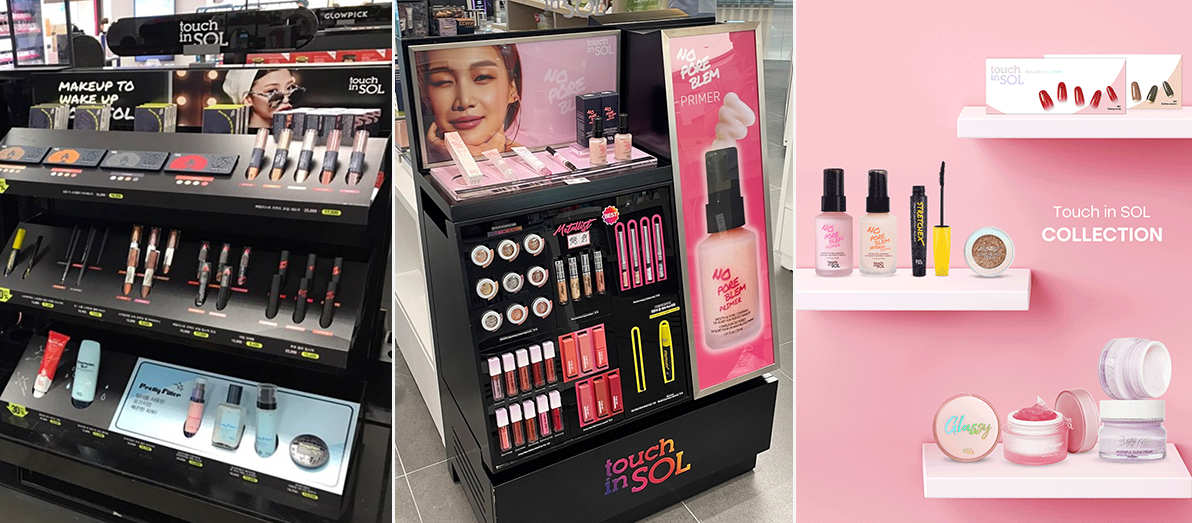
Beyond ODM, Bonne owns two distinct brand businesses. Touch in Sol (launched 2012) is a color cosmetics brand that historically sold in the US Sephora (~330 stores), Canadian Sephora (~60 stores), and Japanese drugstores. The domestic Korean distribution entity was liquidated in November 2021 due to capital erosion; the brand has since been rebuilt around international channels, most recently entering all 650+ Don Quijote stores in Japan in 2025 with a new “In My Heart Stick” product line. Atoseif (acquired 2021 for ~16.4 USD M, 68.9% stake) is a life hygiene company best known for the eco-friendly detergent brand Shesler and the dental care brand Denti Buongiorno. Atoseif was acquired to diversify revenue beyond cosmetics and has been a source of relatively stable domestic revenue through online and home-shopping channels.
The structural shift underway is that brand revenue — previously a secondary contributor — has become the majority of reported revenue by 2025, but not because brand volume grew enough to replace ODM; rather, ODM contracted so sharply that brand became dominant by default. Whether this becomes a lasting positive depends on whether brand margins can cover the fixed-cost base at current scale.
Core Investment Thesis
1. Low PBR (0.45x) reflects a trust deficit, not pure asset undervaluation
The market’s 0.45x PBR pricing embeds the combined effect of two years of reported losses, an accounting governance episode, and uncertainty over whether ODM revenue will recover or be replaced by brand economics. This discount narrows only if operating cash flow turns positive on a sustained basis — not from asset liquidation optionality alone. Investors treating this as a pure “cheap PBR” entry without accounting for the earnings recovery condition are mispricing the risk.
2. Atoseif China contract is the most concrete near-term catalyst
In February 2026, Atoseif signed its first-ever China distribution agreement with Shenzhen Meitong Supply Chain for Denti Buongiorno toothpaste (three variants: breath care, gum care, tartar care). The contract targets minimum purchases of 700,000 units (~2.9 USD M) for 2026, with an initial shipment of approximately 0.7 USD M. This matters because it is the first evidence that Atoseif’s brand can be sold outside Korea directly — at a margin structure different from the ODM model. The key monitoring question is whether the initial order converts to repeat orders with stable pricing rather than remaining a one-off shipment.
3. Touch in Sol Japan channel provides a real-world brand test
After the domestic liquidation of the Touch in Sol distribution entity in 2021, the brand’s survival was uncertain. The 2025 entry into all 650+ Don Quijote Japan stores — combined with an existing Qoo10 Japan online presence — is the first large-scale retail test of whether the brand has genuine pull in a competitive market. Don Quijote is a meaningful distribution partner for K-beauty because of its high foot traffic among foreign tourists and younger domestic consumers. If product sell-through rates support reorder, this becomes a credible margin-accretive revenue stream. Management’s stated goal is to optimize supply by store-level sell-through data, which is the right framework but depends on initial consumer demand holding.
4. ODM recovery would be the most significant upside scenario, but cannot be assumed
Bonne’s historical ODM customer base included major international retailers operating in North America and Europe. The US accounted for approximately 69% of ODM export revenue at its peak. The Q3 2025 ODM revenue figure of approximately -1.7 USD M (versus +4.4 USD M in Q3 2024) suggests the core customer program base contracted significantly — whether due to program terminations, pricing disputes, or market share loss. Any sign of ODM order recovery would rapidly change the economics: the brand revenue base can then cover overhead while ODM contributes incremental margin. This should be monitored closely through semiannual disclosures and any IR communications on new order wins.
Revenue & Margin Snapshot
| Item | 2022 | 2023 | 2024 | 2025 |
|---|---|---|---|---|
| Revenue | 40 | 48 | 45 | 30 |
| Op. Profit | 0 | 4 | 1 | -6 |
| Op. Margin | 1.2% | 9.2% | 2.5% | -18.1% |
| Net Income | 0 | 0 | -6 | -10.5 |
| OCF | -2 | 3 | 3 | -4 |
| CAPEX | 0 | 0 | 1 | 0 |
| ROE | 0.2% | 1.3% | -17.8% | -44.0% |
▶ Annual Revenue, Op. Profit & Op. Margin Trend (USD M)

Key takeaway from the annual trend
The 2023 peak (48 USD M revenue, 9.2% op margin) was driven by US indie brand ODM demand and the post-COVID cosmetics recovery. The 2025 collapse was not primarily a margin pricing issue — it was a volume collapse: ODM revenue fell roughly 82% year-on-year through Q3 2025, while brand revenue grew but not nearly enough to compensate. Fixed overhead that was built for a larger ODM business created the operating loss.
What Drove the 2025 Margin Collapse
The -18.1% operating margin in 2025 has a specific structural cause that the original analysis did not address. Through Q3 2025, Bonne’s cumulative ODM revenue fell to approximately 3.8 USD M — down from roughly ~21 USD M in the same period of 2024, an 82% decline. Over the same period, brand revenue grew 167% to approximately 7.6 USD M and reached 95% of total revenue. However, brand revenue at this scale cannot yet cover the overhead structure inherited from the ODM-era business.
In parallel, the domestic cosmetics channel environment was unfavorable: single-brand shop locations declined sharply as H&B stores (led by Olive Young) and online channels absorbed consumer traffic. This compressed the domestic distribution economics for the brand segment as well. The combination of ODM volume loss and channel mix headwinds produced the reported loss, and recovering from that requires either ODM orders returning or brand revenue scaling further — neither of which is assured in the near term.
Recent Quarterly Performance
All eight quarters shown below reflect negative or near-zero operating profit in 2024–2025. The Q4 2025 net income figure (-6.4 USD M) is unusually large relative to operating loss (-1.7 USD M), suggesting significant non-operating or one-time losses in that quarter, which warrants confirmation from the annual report.
| Quarter | Revenue | Op. Profit | Op. Margin | Net Income |
|---|---|---|---|---|
| 2025Q4 | 5.7 | -1.7 | -30.0% | -6.4 |
| 2025Q3 | 8.0 | -1.1 | -14.1% | -1.5 |
| 2025Q2 | 8.2 | -1.7 | -21.1% | -0.7 |
| 2025Q1 | 8.7 | -1.0 | -11.1% | -1.8 |
| 2024Q4 | 9.0 | -2.1 | -22.8% | -4.2 |
| 2024Q3 | 10.0 | 0.2 | 2.4% | -0.9 |
| 2024Q2 | 13.0 | 0.9 | 6.8% | -3.3 |
| 2024Q1 | 14.0 | 2.1 | 15.1% | 2.3 |
▶ Quarterly Revenue, Op. Profit & Op. Margin Trend (USD M)

Balance Sheet & Financial Stability
The cash burn trajectory from 2025 (-4.0 USD M OCF, -4.2 USD M FCF) is the most important near-term watch item. With the Atoseif acquisition in 2021 financed partly by convertible bonds and the ongoing losses, the leverage and liquidity position needs to be confirmed against the full 2025 annual report. Note that historical 2022–2023 financials were subject to restatement following the accounting violation findings, so the figures below carry that caveat.
| Year | OCF (USD M) | CAPEX (USD M) | FCF (USD M) | ROE (%) |
|---|---|---|---|---|
| 2022* | -2.4 | 0.1 | -2.5 | 0.2% |
| 2023* | 3.1 | 0.1 | 3.0 | 1.3% |
| 2024 | 2.8 | 0.5 | 2.3 | -17.8% |
| 2025 | -4.0 | 0.2 | -4.2 | -44.0% |
* 2022–2023 figures subject to restatement following FSC accounting violation findings (Jan 2025).
Valuation Perspective
At a market cap of approximately 13 USD M, a PBR of 0.45x, and a PER of -2.2x (not meaningful given losses), Bonne is priced in a zone where the market assigns almost no value to earnings recovery and very limited value to the brand optionality. Relative to ODM peers in the domestic market that trade at 10–20x earnings with consistent positive margins, the discount is structurally large. The discount narrows under two scenarios: (1) a return to positive operating cash flow driven by brand revenue scaling and/or ODM order recovery, or (2) a realization event on the asset base. Neither scenario has a clear timeline today. Investors should treat the 0.45x PBR as a floor that holds only if the governance situation remains resolved and the brand pivot shows early margin improvement in 2026 quarterly reports.
Key Risks
1. Accounting governance — not fully resolved
The January 2025 FSC action (inventory over-statement, audit obstruction, false document submissions) represents the most significant non-financial risk. Although management has been replaced, the company is under mandatory external auditor assignment for three years and faces ongoing criminal referral proceedings. Until those proceedings reach a conclusion, there is residual uncertainty over whether additional restatements or penalties could emerge, and whether the financial data investors are working with is fully reliable.
2. ODM revenue may not recover
The 82% year-on-year decline in cumulative ODM revenue through Q3 2025 is not a typical order-timing fluctuation. If key US and European customers permanently moved programs to competing ODM providers during the governance disruption period (when Bonne was under trading suspension for 96 days), recovery would require rebuilding customer relationships from scratch. That is a multi-year process with uncertain outcomes.
3. Brand scale may be insufficient to cover overhead
Brand revenue now accounts for ~95% of total revenue, but the operating loss persists. The Atoseif China contract initial order of ~0.7 USD M and Touch in Sol Japan ramp will take multiple quarters to build to meaningful scale. In the interim, the company is operating with overhead designed for a larger business.
4. Cash burn rate and financing risk
With FCF at -4.2 USD M in 2025, the company needs either revenue recovery or external financing to extend its runway. The 2021 Atoseif acquisition was financed partly with convertible bonds (CB), and any CB redemption pressure combined with ongoing operating losses could require equity issuance — diluting existing shareholders.
What to Watch Next
- 2026 Q1–Q2 quarterly results: whether ODM revenue shows any recovery and whether brand operating margins turn positive at the segment level.
- Atoseif China order execution: did the initial ~0.7 USD M shipment convert to a repeat order? Is the Shenzhen distributor placing reorders on schedule?
- Touch in Sol Japan sell-through data at Don Quijote: reorder rates and whether the 650-store presence is expanding or contracting.
- Criminal proceedings outcome from the FSC referral: whether prosecutors file charges and what the timeline is.
- Cash position and any CB redemption notices: monitor for financing announcements that could signal liquidity stress.
- New ODM order announcements: any disclosure of new customer programs, especially from the US or European indie brand channel.
FAQ
QWhat is Atoseif and why does it matter?
Atoseif is Bonne’s life hygiene subsidiary, acquired in 2021 for ~16.4 USD M. It makes eco-friendly detergents (Shesler) and dental care products (Denti Buongiorno). It matters because it is the part of the business showing concrete international expansion — the February 2026 China distribution contract is Atoseif’s first direct export, and it provides a revenue stream with different margin characteristics from cosmetics ODM.
QWhat happened to Touch in Sol? Is it still active?
Touch in Sol’s domestic Korean distribution entity was liquidated in November 2021 due to capital erosion after COVID hit the color cosmetics market. The brand itself was not abandoned — it has since been rebuilt around international channels. As of 2025, it entered all 650+ Don Quijote Japan stores and is present on Qoo10 Japan. The brand strategy shifted from domestic to export-led, which is the correct pivot but its margin contribution at current scale has not yet been confirmed.
QWhy was Bonne’s stock suspended, and is that risk resolved?
Trading was suspended for 96 days starting January 2025 after the Securities and Futures Commission found accounting violations in 2022–2023 financials (inventory over-statement, audit obstruction, false regulatory submissions) and referred the company to prosecutors. Trading resumed April 15, 2025 after management replacement and governance reforms. The immediate trading risk is resolved, but the criminal referral proceedings are ongoing and the company is under mandatory external auditor assignment for three years — meaning governance risk has not fully cleared.
QWhy did ODM revenue collapse so dramatically in 2025?
The proximate causes were not fully disclosed in public filings, but the 96-day trading suspension and associated management disruption likely damaged relationships with international clients who need supply chain reliability. The US, historically ~69% of ODM export revenue, was the primary exposed market. Whether those client relationships are recoverable is the single most important unresolved question for the investment case.
QWhat would make the 0.45x PBR compress toward book value?
Two things would drive re-rating: first, a return to positive operating cash flow on a sustained two-to-three quarter basis — demonstrating that the brand revenue base can cover overhead. Second, resolution of the criminal proceedings without additional penalties or restatements, which would remove the governance discount. Either alone might partially close the gap; both together would likely drive a more meaningful re-rating.
This material is provided for informational purposes only and does not constitute a solicitation or recommendation to buy or sell any security. All figures, projections, and analyses are based on publicly available information and may differ from actual results; they are subject to change without notice. The reader bears full responsibility for any investment decisions made. The author accepts no legal liability for any investment outcome arising from reliance on this material. All investment decisions should be made at the reader’s own discretion and risk. Independent professional investment advice should be sought where appropriate.
For more Korean small cap ideas, visit our Korean Small Cap Stocks section.
You can also read our Industry Analysis articles.