
Investment View in One Line
Dongbang Medical’s disposable needle and cupping business generates steady cash that management is deploying into a higher-growth HA filler and aesthetic device portfolio — but a 46.3x PER prices in substantial execution on international expansion that has not yet fully materialized in reported earnings.
Executive Summary:
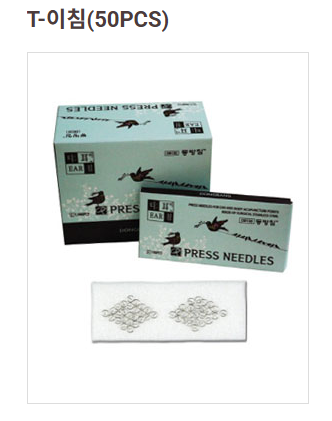
- Dongbang Medical is Korea’s domestic market leader in disposable acupuncture needles and cupping cups, with a growing aesthetic device portfolio including HA dermal fillers (proprietary PNET cross-linking technology), cannulas, skin boosters, and absorbable lifting threads.
- 2024 full-year revenue was 70.5 USD M with operating profit of 10.1 USD M (14.3% margin). Net income was 2.1 USD M and ROE 3.9% — the gap between operating and net margin reflects elevated non-operating costs, depreciation, and tax items that investors should review in company filings.
- 2025 quarterly results through Q3 show revenue of 18.5–20.1 USD M per quarter with operating margins consistently in the 12–15% range, implying an annualized 2025 revenue run-rate of approximately 75 USD M — modestly above 2024.
- The company has established international distribution across China, India, Thailand, and Brazil, and recently secured approvals in new markets (IMCAS/Emirates channels signaled in 2026 news flow). A manufacturing subsidiary in Indonesia provides lower-cost ASEAN production access.
- Valuation (as of early 2026): PER 46.3x, PBR 1.21x, market cap approximately 102.5 USD M (~KRW 143.5bn at ~1,400 KRW/USD). The elevated PER prices in filler segment growth optionality; the modest PBR reflects a manufacturing business with limited ROE conversion to date.
- Key risk: corporate governance and founder succession are explicitly noted in analyst commentary as an overhang on the stock — this is not a standard operational risk and warrants separate monitoring.
Why This Stock Matters
Dongbang Medical occupies a distinctive dual position in Korean medtech: a domestic cash-generative disposable device business — where the company reports market leadership in acupuncture needles and cupping cups — combined with a growing aesthetic device portfolio that management is actively scaling internationally. The needle business provides durable recurring revenue from high-volume consumables; the filler and aesthetic segment represents the growth vector that the market is currently pricing at a premium. What makes the current moment relevant for investors is that the 2025 quarterly run-rate suggests stable underlying profitability, while pending international approvals and the Indonesian manufacturing ramp create near-term catalysts that could either justify or challenge the current earnings multiple. The governance overhang adds a dimension not present in a typical medtech growth story.
Business Model Explained
Dongbang Medical’s revenue structure rests on two legs with different economics. The traditional disposable segment — acupuncture needles, cupping cups, lancets — benefits from manufacturing scale, automated production lines, and a market position reinforced by ISO participation (ISO 17218:2014). These products generate high-volume, relatively predictable revenue with stable margins. The company’s production data shows some lines (cannula, cupping cup) running near full utilization while others (lancets, certain sutures) show meaningful idle capacity — an efficiency gap that either represents an optimization opportunity or a structural demand constraint depending on product-specific market dynamics.
The aesthetic segment operates on a different model: HA dermal fillers, skin boosters, cannulas, and absorbable threads are sold through distributor relationships internationally and through domestic aesthetic clinics. The company’s PNET cross-linking technology for HA fillers is positioned as reducing BDDE residuals relative to conventional BDDE-crosslinked products, which management frames as both a regulatory advantage in approval submissions and a clinical differentiator with physicians. Unlike TDS Pharm (which provides contract manufacturing for pharma clients), Dongbang Medical is pursuing a branded product strategy in aesthetics — a higher-risk, higher-reward path that requires building distribution relationships and regulatory acceptance market by market.
The Indonesian subsidiary adds a third operational dimension: lower-cost ASEAN manufacturing that management positions as both a cost-reduction lever and a geographic hub for Southeast Asian aesthetic market expansion. At this stage, the facility is likely operating below full utilization, which temporarily raises per-unit depreciation and constrains net margins. How quickly it ramps is a variable worth tracking in quarterly disclosures.
Core Investment Thesis
1. Disposable needle and cupping business provides a durable cash foundation
Korea’s domestic leadership in disposable acupuncture needles and cupping cups is not easily replicable — it is built on manufacturing scale, regulatory participation (ISO 17218:2014), and decades of distribution relationships with Korean medical practitioners. This segment generates recurring, relatively low-volatility revenue that funds the aesthetic R&D and international expansion efforts without requiring external financing. It is the financial anchor that allows management to pursue aesthetic growth opportunistically rather than under capital pressure. Investors in the stock are implicitly long this cash cow whether they intend to be or not — its stability matters as much as the growth story.
2. PNET filler technology may provide a regulatory differentiation path in competitive markets
The global HA dermal filler market is crowded with established players (Allergan, Galderma, Hugel, Medytox, LG Chem). Competing on price alone is difficult for a company of Dongbang’s scale. The PNET technology’s stated advantage — reduced BDDE residuals in the cross-linking process — addresses a genuine clinical and regulatory concern in multiple markets where regulators and physicians are increasingly scrutinizing filler safety profiles. If PNET formulations receive favorable treatment in new market approvals and generate positive physician feedback, this creates a differentiated product position that larger competitors cannot easily copy without reformulation. The 2026 IMCAS/Emirates approvals mentioned in news flow are an early test of whether this differentiation translates into commercial traction.
3. Vertically integrated supply chain may support bundled sales and margin improvement
Dongbang Medical’s in-house manufacturing of injection needles, cannulas, and fillers means the company can supply multiple components used in a single aesthetic procedure. Aesthetic clinics that purchase fillers often need the delivery cannula and injection needle alongside the product — and a supplier offering all three at competitive quality may generate stickier clinic relationships and larger average order values than pure-play filler companies. This bundling dynamic is modest at current revenue scale but could compound as the aesthetic portfolio scales. The Indonesian facility, once ramped, adds production capacity that could improve cost economics across the cannula and needle product lines that feed into this bundled offering.
Revenue & Margin Snapshot
| Item | 2024 |
|---|---|
| Revenue | 70.5 |
| Op. Profit | 10.1 |
| Op. Margin | 14.3% |
| Net Income | 2.1 |
| OCF | ~12.0 |
| CAPEX | N/A |
| ROE | 3.9% |
* The 820 bps gap between operating margin (14.3%) and net margin (~3.0%) reflects non-operating costs including depreciation from the Indonesian facility, interest expense, and tax items. Full breakdown available in company filings. OCF figure is approximate.
▶ Annual Revenue & Op. Profit Trend (USD M)

Key takeaway from the annual data
2024 operating margin of 14.3% on 70.5 USD M revenue is solid for a diversified medical device manufacturer of this size. The divergence between operating profit (10.1 USD M) and net income (2.1 USD M) is the key financial story: roughly 8 USD M in non-operating charges — depreciation from the Indonesian facility, interest costs, and tax — are suppressing the earnings base that the 46.3x PER is measured against. If those charges normalize or are absorbed by revenue growth, reported EPS would improve materially without any change in operational performance.
Recent Quarterly Performance
2025 quarterly results through Q3 show operating margins holding in the 12–15% range on per-quarter revenues of 17–20 USD M. The Q1–Q3 2025 cumulative revenue is approximately 56.2 USD M — on track to exceed the 2024 full-year figure of 70.5 USD M if Q4 contributes a similar 18–20 USD M. Net income volatility quarter-to-quarter reflects the non-operating cost profile discussed above and does not indicate underlying operational deterioration.
| Quarter | Revenue | Op. Profit | Op. Margin | Net Income |
|---|---|---|---|---|
| 2025Q3 | 20.1 | 2.7 | 13.6% | 1.9 |
| 2025Q2 | 17.6 | 2.1 | 12.0% | 1.3 |
| 2025Q1 | 18.5 | 2.9 | 15.5% | 2.1 |
| 2024 Full Year | 70.5 | 10.1 | 14.3% | 2.1 |
* The bottom row reflects the 2024 full-year annual figure, not a single quarter. 2025Q1–Q3 cumulative: revenue 56.2 USD M, op.profit 7.7 USD M (13.7% blended margin). Quarterly 2024 breakdown not available in current coverage.
▶ Quarterly Revenue & Op. Profit Trend (USD M)

Balance Sheet & Financial Stability
Full balance-sheet detail is not available in current coverage. What is observable from reported data: OCF of approximately 12.0 USD M in 2024 comfortably covers the 2.1 USD M net income figure, suggesting working-capital release or D&A add-back as a cash flow contribution. This is consistent with a manufacturing business carrying meaningful fixed-asset depreciation. The ROE of 3.9% on 2.1 USD M net income implies an equity base of approximately 54 USD M — meaning the company is not leveraged aggressively at the equity level.
The Indonesian subsidiary is the balance sheet variable to watch. A new manufacturing facility implies capital outlays and initial under-utilization costs that will run through the income statement as depreciation before being offset by production revenue. Management’s guidance on that facility’s ramp timeline and its projected break-even utilization rate would materially help investors model the earnings trajectory. This information should be sought in the annual report or shareholder meeting disclosures.
| Year | OCF (USD M) | CAPEX (USD M) | FCF (USD M) | ROE (%) |
|---|---|---|---|---|
| 2024 | ~12.0 | N/A | N/A | 3.9% |
* Full FCF calculation requires CAPEX disclosure, which is not available in current coverage. Indonesian subsidiary CAPEX likely a meaningful item in recent periods.
Valuation Perspective
At a market cap of approximately 102.5 USD M (~KRW 143.5bn at ~1,400 KRW/USD, as of early 2026), PER 46.3x, and PBR 1.21x, Dongbang Medical is priced for growth. A 46.3x multiple on 2024 net income of 2.1 USD M is mathematically demanding — it requires investors to believe that net income will expand substantially as the aesthetic segment scales and as the Indonesian facility’s depreciation drag normalizes. The operating-to-net income gap discussed above (10.1 USD M operating vs 2.1 USD M net) is central to this: if non-operating charges were to reduce by even 30–40%, reported earnings would roughly double without any revenue growth, and the effective PER on normalized earnings would look quite different.
The PBR of 1.21x is modest, reflecting a manufacturing business with tangible asset backing. The combination of elevated PER and modest PBR is characteristic of a company where reported earnings are compressed by non-cash or non-recurring costs — which is consistent with the current profile. The re-rating scenario requires demonstrating that the compression is temporary. Comparable peer multiples (Hugel, Medytox, Galderma) are not available for direct numerical comparison in this coverage, but the general valuation framework for Korean aesthetic device companies with demonstrated international growth typically supports 20–30x operating earnings where visibility is credible — making the current premium contingent on execution.
Key Risks
1. Elevated PER requires aesthetic segment execution that has not yet fully appeared in earnings
A 46.3x PER on 2.1 USD M net income implies the market is pricing in substantial future earnings growth. If international filler approvals arrive later than expected, if distributor channels develop more slowly than management projects, or if the Indonesian facility takes longer to reach productive utilization, net income may not grow fast enough to absorb the current multiple. The risk is not that the business deteriorates — it is that it progresses at a pace the market has not priced as sufficient.
2. Filler market competition is intense and scale-dependent
Allergan (Juvederm), Galderma (Restylane), Hugel, and Medytox operate with significantly larger sales forces, physician relationship networks, and regulatory approval portfolios than Dongbang Medical. In international markets, brand credibility and the depth of clinical data behind a filler product often matter as much as product chemistry. PNET technology provides differentiation only if it translates into approval outcomes and physician adoption — neither of which is assured at the current stage.
3. Corporate governance and founder succession overhang
Analyst commentary explicitly notes concentration among founder/major shareholders as a strategic continuity risk. This is not a standard operational risk — it is a governance discount that institutional and foreign investors apply to companies where succession planning is unclear or where founder influence creates strategic path dependencies. Until there is clarity on governance structure going forward, this discount is likely to persist in the stock’s multiple. The upcoming shareholders’ meeting disclosures are the first near-term venue where this may become more visible.
4. Raw-material and FX exposure
HA (hyaluronic acid), stainless steel, and polypropylene are the primary input costs. HA pricing in particular is subject to supply concentration dynamics — a significant portion of global HA production is controlled by a small number of Chinese and European manufacturers. A supply disruption or price spike in HA would directly compress filler segment margins at a time when the company is trying to demonstrate consistent profitability. FX volatility in key export markets (China, India, Southeast Asia) adds a second layer of margin variability that is difficult to fully hedge at Dongbang’s scale.
What to Watch Next
- New international filler approvals and initial commercial launch results — particularly the IMCAS/Emirates channels signaled in 2026 news flow. Volume and reorder rates in first-year commercial markets will indicate whether PNET technology is winning physician adoption.
- Indonesian facility utilization and depreciation disclosure in the 2025 annual report — the ramp timeline and cost structure of this facility are the key inputs for modeling when net income will begin to meaningfully close the gap with operating profit.
- 2025 full-year and 2026Q1 results: whether Q4 2025 maintains the 13–15% operating margin trend and whether the Q1–Q3 cumulative revenue run-rate translates into full-year growth above 70.5 USD M.
- Shareholders’ meeting disclosures on governance, succession, dividends, and any strategic announcements including major ODM/OEM contracts or distribution partnerships.
- Production line utilization data by product category — particularly whether idle capacity in lancets and certain suture lines is improving, which would signal either demand recovery or cost rationalization.
FAQ
QWhat does Dongbang Medical actually make, and where does the revenue come from?
Two segments: traditional disposable medical devices (Korean acupuncture needles, cupping cups, lancets — domestic market leadership) and aesthetic medical devices (HA dermal fillers, cannulas, skin boosters, absorbable suture threads — sold internationally through distributors). The needle and cupping business provides volume-driven stable revenue; the filler and aesthetic segment is smaller but growing faster and carries higher margins per unit.
QWhy is net income so much lower than operating profit?
In 2024, operating profit was 10.1 USD M but net income was only 2.1 USD M — an approximately 8 USD M gap. This reflects non-operating charges including depreciation from the Indonesian manufacturing facility, interest expense on any borrowings, and tax provisions. These items are real but some are non-cash (depreciation) or potentially declining over time (as the Indonesian facility reaches full utilization). Investors should model normalized earnings with and without these charges to understand the range of outcomes embedded in the 46.3x PER.
QWhat is PNET technology and does it matter competitively?
PNET is Dongbang Medical’s proprietary cross-linking process for HA fillers, designed to minimize BDDE (butanediol diglycidyl ether) residuals in the final product. BDDE is the standard cross-linker used across most commercial fillers, but residual BDDE raises safety concerns with some regulators and clinicians. PNET’s value proposition is that it achieves comparable gel performance with lower residuals — which could support regulatory approval in stricter markets and appeal to safety-conscious physicians. Whether it translates into material commercial advantage depends on whether regulators treat lower BDDE as a meaningful approval criterion and whether physicians actively request it in clinical practice.
QIs the 46.3x PER justified?
It depends entirely on execution. The PER is measured on reported 2024 net income of 2.1 USD M, which is depressed by depreciation and non-operating charges. If those normalize and if the aesthetic segment grows as management projects (34% CAGR per IR materials), net income could reach 6–8 USD M within two to three years, implying a forward PER of 13–17x at the current price — which is reasonable for a Korean aesthetic device company with proven international distribution. If execution delays materialise, the current multiple has limited margin of safety.
QWhat is the governance risk and why does it matter?
Analyst commentary specifically identifies founder/major shareholder concentration as a strategic continuity risk — meaning the company’s long-term direction depends heavily on the founding family’s decisions, and the succession plan is not clearly established. For institutional investors, governance concentration creates discount-to-peers valuation because it introduces the possibility that strategic decisions may not be fully aligned with minority shareholder interests. This is a common feature of Korean small and mid-cap family-controlled companies and typically resolves (either positively or negatively) around succession events. It is worth monitoring rather than dismissing.
This material is provided for informational purposes only and does not constitute a solicitation or recommendation to buy or sell any security. All figures, projections, and analyses are based on publicly available information and may differ from actual results; they are subject to change without notice. The reader bears full responsibility for any investment decisions made. The author accepts no legal liability for any investment outcome arising from reliance on this material. All investment decisions should be made at the reader’s own discretion and risk. Independent professional investment advice should be sought where appropriate.
For more Korean small cap ideas, visit our Korean Small Cap Stocks section.
You can also read our Industry Analysis articles.